The Comprehensive Engineering Guide to Industrial Storage Infrastructure in Malaysia
In the modern logistics landscape, warehouse efficiency is no longer a luxury, it is a competitive necessity. For industrial facilities across the country, from the manufacturing hubs of Selangor to the logistics ports of the North, a robust racking system in Malaysia serves as the structural backbone of the supply chain.
At MR Space, with over 10 years of specialized experience, we understand that high-capacity storage is a critical investment in safety and operational throughput. This guide provides a detailed technical breakdown of our specialized heavy duty rack solutions in Malaysia, engineering considerations, and selection protocols.
Taxonomic Overview of MR Space Heavy Duty Systems
Every warehouse environment has unique SKU velocities and handling requirements. MR Space engineers systems tailored to these specific operational flows, utilizing high-tensile steel and CIDB-certified installation protocols.
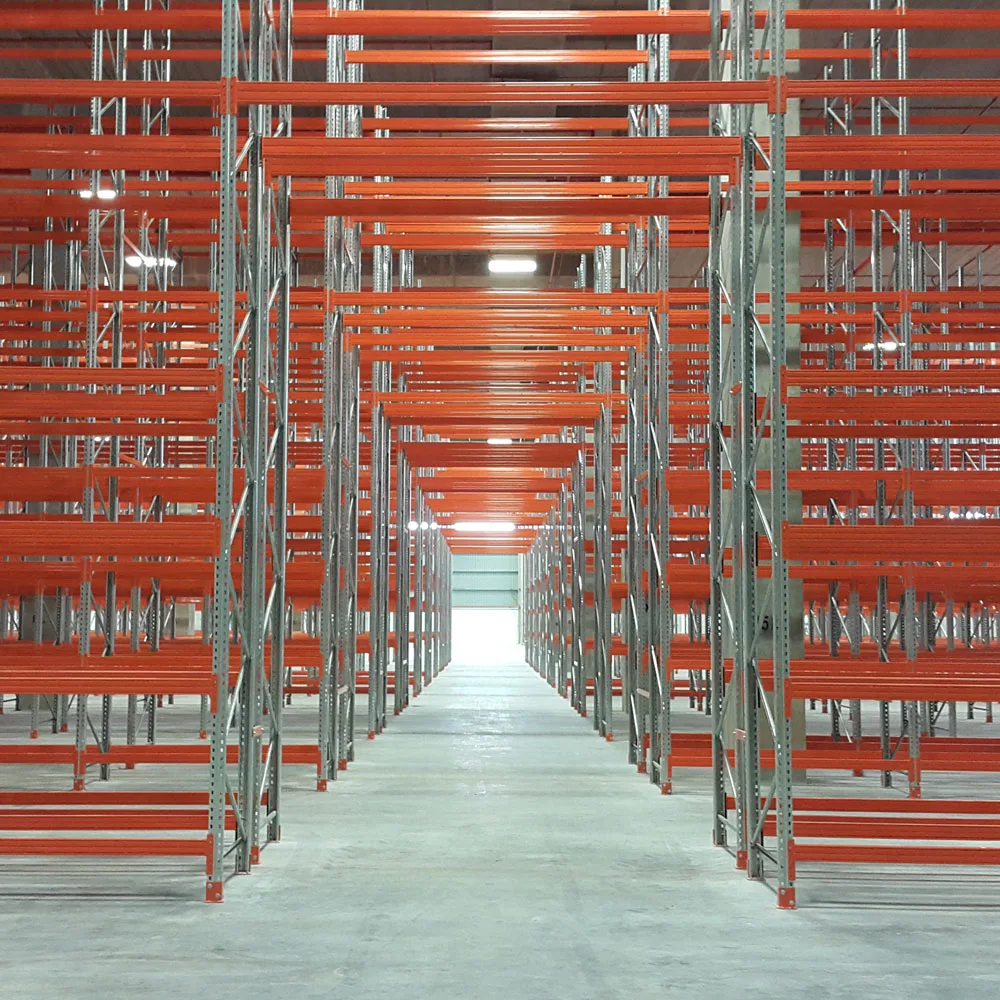
Selective Pallet Racking (SPR)
The Selective Pallet Racking system remains the industry standard for 100% accessibility. It is designed for high-SKU environments where every pallet must be reached immediately without moving others.
- Structural Composition: Comprised of heavy-duty vertical upright frames and horizontal load beams secured with safety locking pins.
- Technical Advantage: Infinite adjustability of beam levels to accommodate varying pallet heights and inventory dimensions.
- Operational Flow: First-In, First-Out (FIFO).
Double Deep Pallet Racking
A specialized variation of the Selective system, Double Deep racking stores two pallets deep from a single aisle. This increases storage density by approximately 30% by reducing the number of required access aisles.
- Structural Composition: Utilizes specialized row spacers to connect back-to-back rows and reinforced guide rails where necessary.
- Technical Advantage: High-density storage with lower capital expenditure compared to fully automated systems.
- Operational Flow: First-In, Last-Out (FILO).
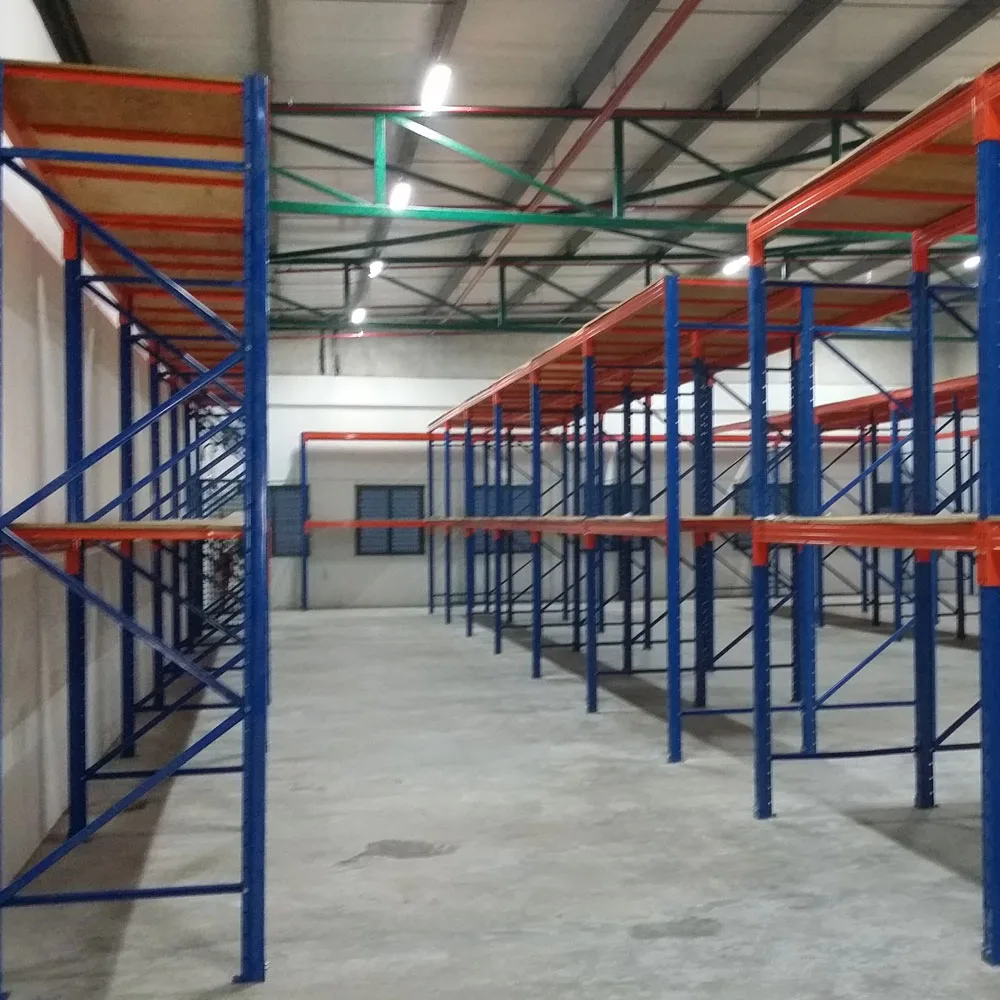
Heavy Duty Mezzanine Platform
Unlike standard racking, these structural platforms double your operational floor space. They are engineered to support heavy-duty storage, office cubicles, or staging areas above existing warehouse operations.
- Structural Composition: High-grade structural steel columns (H-Beam or Cold-Rolled) supporting 12mm to 25mm plywood or galvanized steel decking.
- Technical Advantage: Maximizes vertical cubic space without the need for building extensions or expensive renovations.
- Load Capacity: Engineered for 1000kg to 3000kg UDL depending on structural requirements.
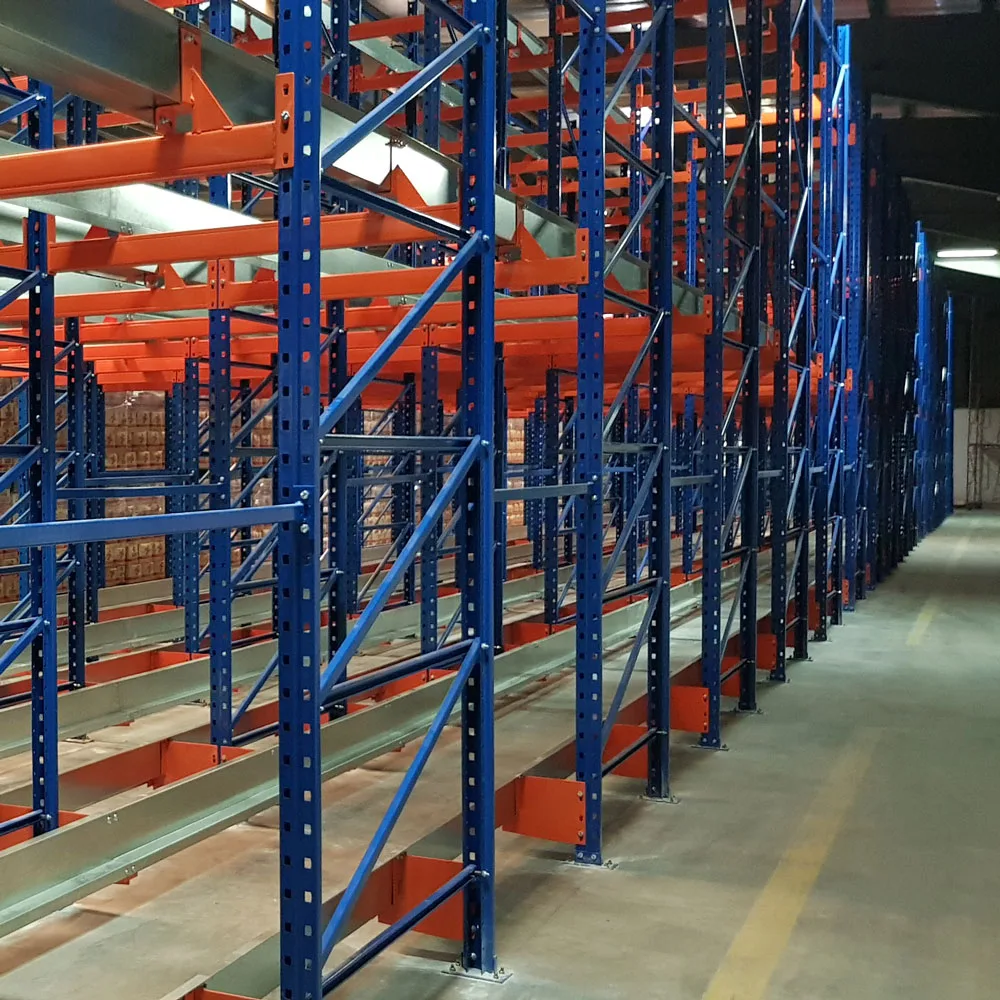
Radio Shuttle Racking System
A semi-automated high-density solution that utilizes a remote-controlled shuttle car to transport pallets within the racking channels.
- Structural Composition: Heavy-duty frames equipped with precision-engineered shuttle rails instead of standard beams.
- Technical Advantage: Significantly reduces forklift travel time and minimizes the risk of structural impact damage.
- Operational Flow: Highly flexible; capable of supporting both FIFO and FILO configurations.
Drive-In Racking System
Engineered for maximum cubic utilization, Drive-In systems allow forklifts to enter the racking structure itself. This system eliminates aisles entirely, dedicating nearly 80% of the warehouse volume to storage.
- Structural Composition: Pallets rest on continuous high-strength support rails rather than traditional crossbeams.
- Technical Advantage: Ideal for bulk storage and cold storage environments in KL and Selangor where energy costs require maximum density.
- Operational Flow: First-In, Last-Out (FILO).
Structural Engineering & Material Specifications
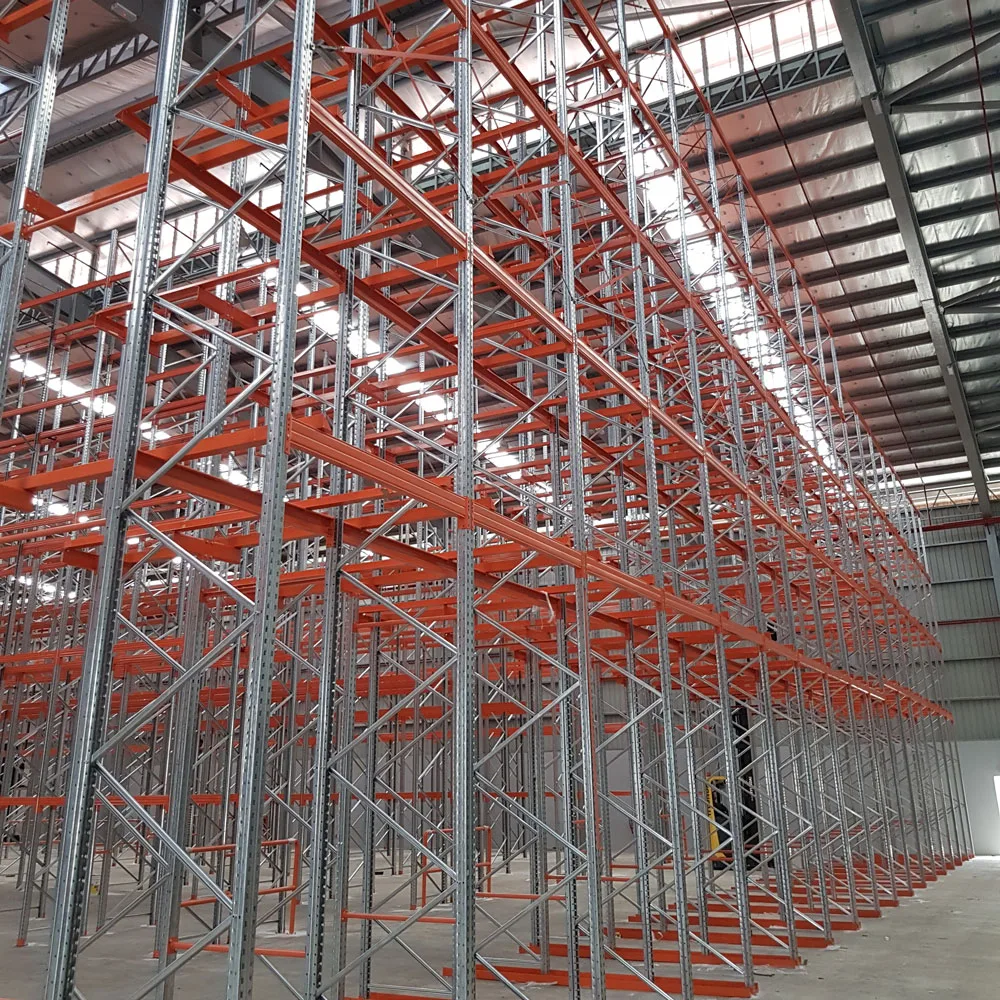
Our storage infrastructure in Malaysia is not merely “shelving”; it consists of engineered steel structures designed to manage immense static and dynamic forces. Every component is produced with the following technical standards:
Material Composition
We utilize high-tensile steel for our heavy-duty uprights and beams. The production process ensures that the steel maintains a high strength-to-weight ratio, which is critical for vertical stability at heights exceeding 4,000mm. By using specific steel grades, we ensure that the structure can withstand industrial warehouse demands without structural fatigue.
Load Bearing Capacities (UDL)
- Our systems are strictly rated based on Uniformly Distributed Load (UDL) per level.
- Heavy Duty Range: 1,000kg to 3,000kg UDL per level.
- Engineering Reliability: Every project is designed with a safety factor that accounts for the maximum load capacity, ensuring the structure remains stable even under peak inventory levels.
Compliance, Safety, and CIDB Standards
In the KL and Selangor industrial sectors, warehouse safety is governed by strict structural protocols. As a CIDB Grade G2 registered contractor, MR Space ensures that every installation is legally and structurally compliant with Malaysian standards.
Structural Bracing & Stability
Even in non-seismic zones, lateral forces caused by equipment impacts or uneven loading can compromise a rack. We implement:
- Horizontal & Diagonal Bracing: Precision-bolted to the upright frames to provide the necessary “triangulation” that resists swaying and vertical collapse.
- Row Spacers: These connect back-to-back rows, turning individual units into a unified, stable block to increase overall structural rigidity.
Technical Procurement Protocol: Selection to Installation
Choosing a professional warehouse racking system in Malaysia requires a multi-stage technical evaluation to ensure site safety.
Stage 1: Site Measurement & Load Analysis
Point Load Calculation: We evaluate the weight each upright post exerts on the floor. For 3,000kg loads, it is vital to ensure the concrete slab can support the concentrated pressure without cracking.
Precision Leveling: We use industrial shims during installation to ensure the upright frames are perfectly vertical, maintaining the center of gravity and structural balance.
Stage 2: Equipment Calibration
The layout is designed around your specific forklift or reach truck fleet:
- Aisle Width: We ensure the layout accommodates the turning radius of your equipment (typically 2.8m to 3.2m for standard reach trucks).
- Lift Height Clearance: We match beam levels to your forklift’s mast height to ensure safe placement and retrieval at the highest levels.
Stage 3: Safety Accessories
Our CIDB-certified teams install vital safety components as standard:
- Upright Protectors: Heavy-duty steel guards anchored to the floor to shield the rack base from accidental forklift impacts.
- Safety Pins: Mandatory locking pins that prevent beams from being accidentally dislodged by a forklift’s upward movement.
- Decking Options: We provide 12mm/18mm/25mm Plywood, Wire Mesh, or Steel Panels to support various load types and improve fire safety compliance.
Conclusion
A professional storage installation is the foundation of your warehouse’s productivity. By choosing MR Space, you are partnering with a manufacturer that prioritizes engineering precision, CIDB-certified safety, and long-term durability. Whether you are setting up a new distribution center or optimizing an existing factory, our team provides the technical expertise to turn vertical space into a strategic asset.
FAQ
What is the difference between UDL and Point Load?
UDL (Uniformly Distributed Load) assumes weight is spread evenly across the beam. Point Load refers to concentrated weight at a specific point. Even if the total weight is within limit, a concentrated load can cause dangerous beam deflection and structural risk.
How does epoxy powder coating protect racks in a tropical climate?
Epoxy powder coating is cured at 180°C to form a non-porous protective layer. This coating is highly resistant to humidity in Malaysia, helping prevent oxidation, corrosion, and long-term structural rust.
Can I mix different brands of beams and uprights?
No. Different manufacturers use slightly different connector dimensions. Mixing components can compromise structural integrity and safety certification, increasing the risk of rack failure or collapse.
What are the mandatory safety accessories for a heavy-duty racking system?
A proper installation must include safety locking pins, floor anchors, and upright protectors. These components help prevent beam dislodgement and protect racks from accidental forklift impacts.
How do I know if my warehouse floor can support a racking system?
We calculate the point load exerted by rack uprights. The concrete floor must have sufficient PSI strength to support concentrated pressure without cracking or sinking under load.


