When you’re sourcing retail fixtures, it’s tempting to turn everything into a simple spreadsheet: quantity, dimensions, and price per unit. But in real stores, “cheap” racks often become expensive the moment they start wobbling, rusting, chipping, or limiting how your team replenishes stock. If you’re evaluating a Display Rack Supplier Malaysia, quality should be defined by total performance in your environment—not just how low a quote can go.
This is an opinionated view, but it’s grounded in what repeatedly causes friction for retail owners, store planners, and purchasing managers: racks that look similar in photos but behave very differently after installation. The good news is that quality is measurable. You can inspect it, ask for it, and write it into your purchase scope.
Below is a practical checklist for what “quality” really means in display racks and gondola systems, what to request during supplier evaluation, and where paying a bit more often reduces long-term operational cost.
1) Quality starts with fit for purpose, not a catalogue photo
A rack that’s “strong enough” in one shop can be the wrong choice in another. The first part of quality is specifying the rack to match the merchandise and the workflow. Many buyer disappointments come from a mismatch between intended use and actual load patterns.
For example, a convenience store that rotates fast-moving items needs shelving that holds alignment under frequent picking and replenishment. A pharmacy may need tighter shelf pitch options and accessories for organised facing. A hardware retailer might need heavier shelves, stronger brackets, and upright stability due to dense product weight.
What to clarify early
- Load type: uniform loads vs point loads (e.g., concentrated heavy items like paint tins).
- Merchandise size range: small SKUs need more adjustability; bulky goods need deeper shelves and stronger bracing.
- Access and replenishment: front-loading only, or backroom-to-shelf replenishment where racks take more knocks.
- Future changes: do you need modular expansion, reconfiguration, or store rollouts?
Quality here is less about material and more about engineering judgement: can the supplier guide you to the right system rather than simply selling what they already stock?
2) Material and structural integrity: stability you can feel
In the aisle, customers notice neatness and presentation. Your staff, meanwhile, will notice something more basic: does the rack feel stable during daily work? When racks twist, sway, or slowly go out of square, it’s not just annoying—it can lead to damaged goods, injuries, and costly rework.
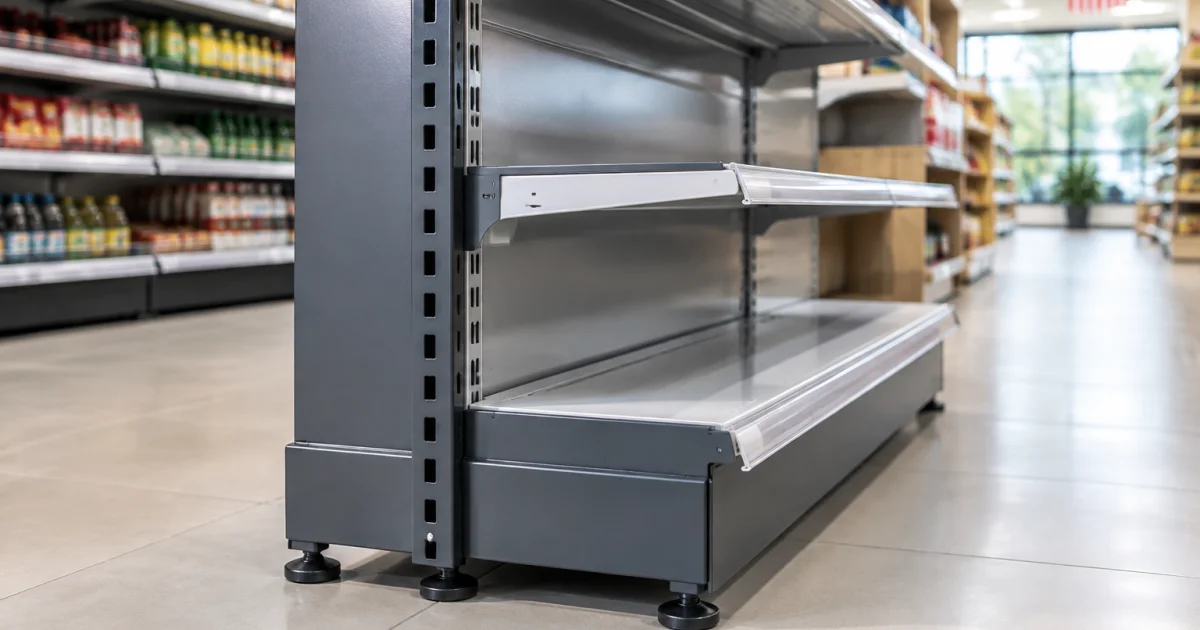
Practical indicators of structural quality include upright stiffness, base stability, and how well brackets lock under load. Even when two racks use “steel,” the outcome depends on steel thickness, profile design, punching accuracy, and the overall system geometry.
What to examine (or ask to see)
- Upright profile rigidity: deeper or reinforced profiles generally resist sway better.
- Bracket engagement: positive locking, minimal play, and consistent fit across bays.
- Base feet and levelling: quality installations correct floor unevenness so shelves don’t “walk” over time.
- Bracing and connectors: tidy, robust connections matter more than buyers expect.
If you’re buying Gondola Racks Malaysia for a supermarket-style layout, structural quality also includes the end-cap behaviour: end-bays tend to take more impact and should feel especially solid.
3) Finish and coating: the difference between “new” and “still good in 2 years”
Coating quality is often treated like aesthetics. In reality, it’s operational protection. Chips and rust aren’t just cosmetic—they can create sharp edges, stain products, and make a store look tired long before you intend to renovate.
Without making claims about any one method being universally “best,” what matters is whether the supplier runs controlled processes and can provide consistency across batches—especially important for chains and multi-outlet rollouts where colour match and texture uniformity affect brand presentation.
How to assess finish quality practically
- Edge coverage: thin coating at edges is where rust often begins.
- Scratch resistance: ask how the finish handles regular shelf adjustment and stocking friction.
- Consistency: colour tone and texture across uprights, shelves, brackets, and accessories.
- Cleaning tolerance: retail cleaning chemicals and repeated wiping shouldn’t quickly dull the finish.
Ask to see sample parts that have been handled, not only showroom-perfect pieces. A supplier with local manufacturing capability and controlled powder-coating processes is often better positioned to maintain consistent fit-and-finish, but it still needs to be verified with samples and references.
4) Dimensional accuracy and modularity: “it fits” is a quality feature
One hidden cost in retail fixture projects is time: time spent aligning bays, forcing misfit parts, revisiting site to correct gaps, or redoing end-caps that don’t line up. Dimensional accuracy is not glamorous, but it’s a strong marker of quality.
This matters most when you’re building long runs of shelving where small errors accumulate. If holes are not punched consistently or parts vary slightly, shelf levels won’t align across bays and the aisle will look messy. For Supermarket Racks Malaysia layouts, alignment is part of customer perception: straight lines signal order and cleanliness.
Questions to ask a supplier
- How do they control tolerances across production batches?
- Are accessories (dividers, hooks, ticket rails, end-panels) designed for the same system or adapted?
- Can they provide modular add-ons later without forcing a full replacement?
Modularity is also about your future merchandising strategy. Quality suppliers design for change: adjustable shelf pitch, multiple depths, corner solutions, and expansion bays that don’t “break” the look of the original installation.
5) Supplier capability is part of product quality: design support, installation, and after-sales
Here’s the opinionated part: the rack is only half the product. The other half is the supplier’s capability to design, deliver, and support the solution. Many frustrations blamed on “bad racks” are actually due to weak layout planning, rushed installation, or poor communication between sales and site teams.
A higher-quality supplier behaves more like a project partner: they clarify requirements, propose workable layouts, and flag trade-offs early (e.g., maximizing display capacity vs keeping aisle flow comfortable). They also manage installation properly—because even the best shelving rack system performs poorly when it’s not levelled, anchored where needed, or assembled with missing components.
What “good supplier” looks like in practice
- Site measurement and layout planning: clear drawings and bay counts, not guesswork.
- Load guidance: recommendations for light, medium duty rack, or heavier configurations based on real use.
- Professional installation: consistent alignment, correct bracing, and clean finishing at end-panels.
- Spare parts availability: quick replacement for damaged shelves, brackets, uprights, and accessories.
- Maintenance mindset: advice on periodic checks, safe use, and reconfiguration support.
Even if your immediate project is retail fixtures, it’s a good sign when a supplier also understands industrial systems like heavy duty rack, pallet storage, or mezzanine solutions—because it usually indicates stronger engineering and process discipline across their product line. (That said, don’t buy warehouse-grade solutions for retail just because they sound “stronger”; buy what fits your use.)
6) A buyer’s checklist: how to compare quotes beyond unit price
To compare suppliers fairly, standardise your evaluation. Ask each supplier to quote against the same scope, then score them against quality indicators that affect lifetime cost. This reduces the chance you’re comparing “apples to oranges,” such as different steel gauges, different coating specs, or missing accessories.
Practical quote comparison checklist
- System specification: upright profile, shelf thickness, bracket type, back panel options, base deck, end-cap solution.
- Accessories included: dividers, hooks, price tag rails, wire baskets, signage holders, kick plates.
- Installation scope: levelling, anchoring (when required), alignment across runs, finishing panels, site protection.
- Lead time and rollout support: ability to support multi-store schedules and consistent parts supply.
- Warranty terms (clarified): what’s covered and what is considered wear-and-tear.
- After-sales response: process for spare parts and site revisits.
If you’re evaluating a custom size requirement—common for odd corners, pillars, or special displays—be explicit. “Custom made” quality is demonstrated by clear drawings, confirmed dimensions, and a plan for how custom parts integrate with standard components so future expansion remains easy.
To dive deeper into system types and planning, you may find it useful to read this guide to gondola racks in Malaysia or a more tactical overview like tips for selecting durable supermarket racks.
Conclusion: “Quality” is a risk decision—make it visible
In retail, racks are infrastructure. When they fail, your team works around the problem every day—until you pay again to replace or repair them. Quality isn’t only about thicker steel or a nicer paint finish (though those matter). It’s the combination of fit-for-purpose design, structural stability, consistent manufacturing, clean installation, and after-sales support that keeps your store looking sharp and functioning smoothly.
If you take only one thing from this article, let it be this: make quality measurable. Ask for samples, verify specifications, confirm what’s included, and assess supplier capability—not just the unit price. That’s how you select a supplier you can confidently rollout with, not merely a vendor you hope won’t cause problems.
If you’re comparing different fixture types, you may also want a broader view of storage systems and safety considerations in what a warehouse racking system is—many of the same principles (load, stability, installation discipline) apply to retail shelving too.
Frequently Asked Questions
How can I judge a display rack’s quality quickly during supplier comparison?
Ask for a physical sample or visit a completed site. Check rack stability (wobble), bracket lock-in feel, shelf deflection under a realistic load, coating coverage at edges, and alignment across multiple bays. Also confirm what’s included in the quote—accessories, end-panels, and installation levelling often separate a “cheap” quote from a complete solution.
Are gondola racks always the best choice for supermarkets and minimarkets?
Gondola systems are popular because they’re modular, expandable, and efficient for long aisles. However, the best choice depends on product weight, aisle width, and replenishment workflow. For heavier items or high-impact zones (end-caps, promotional areas), you may need reinforced components or a different configuration to maintain safety and presentation.
What should a good display rack supplier include besides the racks themselves?
A capable supplier should support layout planning, confirm measurements, provide clear drawings and bay counts, deliver professional installation (levelling, alignment, and finishing), and offer after-sales support such as spare parts and reconfiguration help. These services reduce downtime and keep the store consistent during expansions or refreshes.
Can suppliers provide custom made size racks without creating future problems?
Yes—when custom parts are engineered to integrate with a standard system. Request drawings, confirm how custom uprights/shelves connect to standard brackets and accessories, and ensure spare parts can be supplied later. The goal is a custom fit now without locking you into a one-off system that’s hard to expand or maintain.
Is a higher price per unit always a sign of better quality?
Not always. Higher prices can reflect stronger materials, better coating, tighter manufacturing control, and more complete installation scope—but they can also reflect brand positioning or unnecessary features. Compare quotes using a checklist (specs, finish, accessories, installation, after-sales) so you’re paying for measurable improvements rather than assumptions.
Want retail racks that stay stable, aligned, and easy to expand?
Mr Space designs, manufactures, supplies, and installs retail display and gondola racking systems—backed by in-house engineering support, controlled production processes, and practical site planning. If you’re comparing suppliers, we can help you specify the right rack system for your product mix, aisle flow, and rollout needs.
Share your floor plan (or request a site measurement) and we’ll recommend a layout and system specification you can evaluate confidently—beyond price per unit.


