When planning a warehouse upgrade or new facility handover, the riskiest assumption is that racking is a “standard item” you can finalize late. In reality, storage systems depend on steel selection, fabrication, powder-coating, accessories, transport, and on-site installation capacity—each with its own constraints. That is why the same bill of materials can be quoted with different lead times and pricing depending on timing, specification changes, and factory loading.
This guide is for Storage Racks Malaysia buyers who need dependable inputs for RFQs, budget approvals, and installation windows. We break down what really drives lead time and pricing for pallet racking, shelving, mezzanine structures, and related warehouse storage solutions—so you can ask better questions, compare quotes on the same scope, and protect your go-live date.
You will also find examples, a copy/paste RFQ checklist, and a simple decision framework for balancing access, density, and speed—useful if your operation is also asking how to run an efficient warehouse while expanding capacity.
1) Why lead time and pricing move: the racking supply chain in plain terms
Even when you are buying “the same pallet rack,” suppliers may be working from different upstream assumptions. A racking project typically runs through:
- Engineering & layout confirmation: site measurement, configuration, beam levels, aisle widths, MHE compatibility, and load validation.
- Material allocation: steel grades/thicknesses that meet safe working load and deflection requirements.
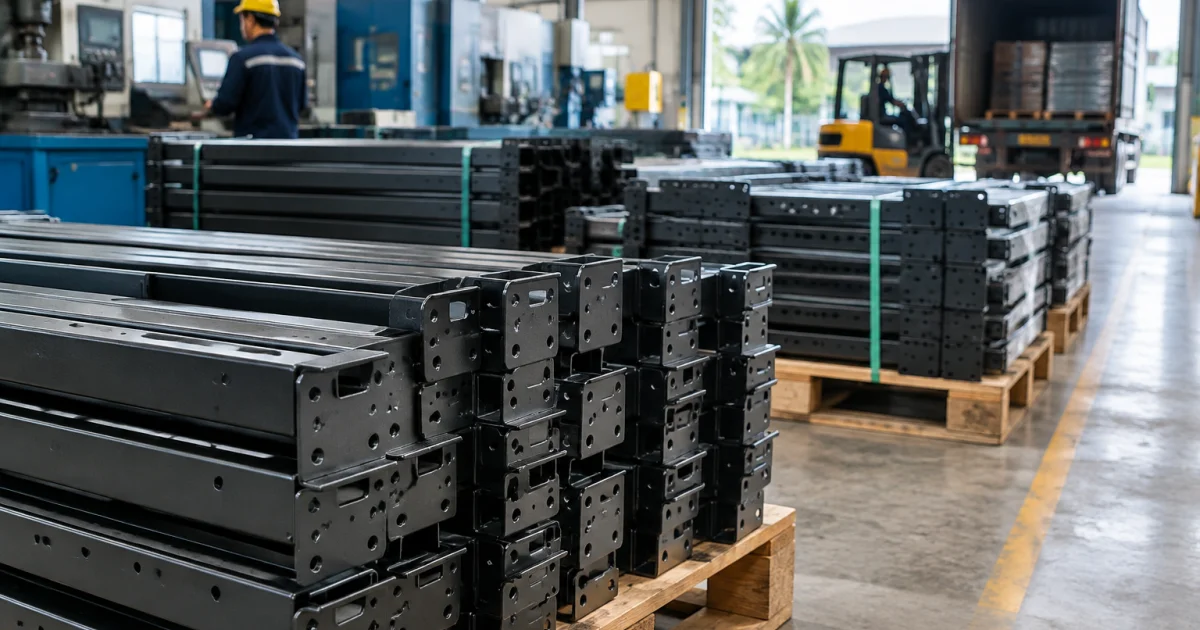
- Fabrication scheduling: roll-forming, punching, welding, cutting beams, and producing accessories.
- Surface finishing: pre-treatment, powder-coating, curing, and (if required) color matching.
- Packing & dispatch: bundling, palletising, load planning, and transport preparation.
- Delivery & installation: truck availability, site access windows, crew scheduling, and safety coordination.
Pricing and lead time change when any stage becomes a bottleneck. That constraint is often local and operational (e.g., a full coating line, a high mix of custom components, or limited installation slots during shutdown periods), not necessarily driven by headline news.
Key idea for buyers: Treat racking as a manufactured-and-installed system, not a last-minute hardware purchase. RFQs that align design-to-install scope typically produce fewer surprises than comparing line-item prices alone.
2) Materials that change cost and availability (without changing your drawing)
Racking cost is anchored to steel input and the complexity of turning steel into consistent, safe components. Small specification differences can change which coils/sections are suitable, impacting both price and lead time.
Steel type, thickness, and “equivalent” substitutions
Two proposals can look similar on paper yet rely on different thicknesses, profiles, or reinforcement strategies to meet the same working load. This matters because:
- Not all thicknesses are equally available across mills and stockholding patterns.
- Some profiles require specific tooling or punching patterns, reducing manufacturing flexibility.
- “Equivalent” substitutions can affect compatibility with accessories, connectors, baseplates, and bracing.
Actionable tip: Ask bidders to declare any alternate materials or profile substitutions as “proposed equivalent” and confirm they meet required loads and configurations. This keeps comparisons fair and reduces redesign cycles.
Powder coating, pre-treatment, and color requirements
Powder coating is not only cosmetic; it affects durability in warehouse environments. Coating lines can become a bottleneck due to batching rules, color changeovers, and curing cycles. Non-standard colors or special finishing requirements can extend lead time even after fabrication is complete.
Practical example: Standard frame and beam colors can be batched efficiently. Multi-color zoning (different colors by bay/area) may require multiple coating runs and longer finishing schedules.
Fasteners, anchors, and safety accessories
Anchors, shims, protectors, end-of-aisle barriers, mesh decking, pallet supports, and safety pins are small line items but can become schedule-critical if missing at installation. They also vary by rating and quality between suppliers.
Actionable tip: Treat safety accessories as critical-path items. Require an explicit list (not an “allowance”) so you can confirm completeness before installers arrive.
3) Manufacturing capacity: why a local racking factory can shorten uncertainty
One of the biggest differences between quotes is not just price—it is schedule confidence. Suppliers with in-house manufacturing can often provide clearer visibility over:
- Fabrication slot availability (roll-forming, punching, welding)
- Powder-coating capacity, batching plans, and changeovers
- Quality control steps and rework avoidance
- Packing/dispatch coordination with installation dates
Working with a Racks Manufacturer Malaysia (rather than only a trading intermediary) can reduce dependency on multiple third parties. It does not automatically make a project “fast,” but it can improve the reliability of committed dates because fewer handoffs are involved.
What to ask in a BOFU RFQ:
- Which components are manufactured in-house vs. outsourced?
- What is the production sequence (uprights, beams, then accessories)?
- How is powder-coating scheduled (batching rules, color changeovers)?
- What inspection and packing checks occur before delivery?
If you are comparing a Racks Supplier Malaysia that sources from multiple factories, ask the same questions and request clarity on which factory is used and which lead-time assumptions are locked vs. estimated.
4) Specification choices that quietly increase lead time (and how to avoid them)
Many delays are avoidable: late drawing approvals, assumed site readiness, or changing operational requirements after fabrication starts. Common “silent lead time multipliers” include:
Late load data or changing pallet configuration
Racking design depends on unit load and handling method. Changes to pallet height, weight, or consistency can require different beams, upright spacing, or bracing—triggering re-quotation and a new production slot.
Actionable tip: Include a “load and handling sheet” in your RFQ: pallet footprint, max/typical pallet weight, max pallet height, handling equipment (reach truck/counterbalance/stacker), and whether pallets are standard or oversize.
Custom bay sizes and non-modular layouts
Customization is sometimes necessary, but too many unique beam lengths, levels, or upright heights reduces batching efficiency. More unique parts usually means more setup time, more packing complexity, and higher risk of missing components on-site.
Practical example: Standardising to two beam lengths instead of five simplifies manufacturing and packing. You can often meet operational needs by adjusting bay counts or aisle geometry rather than creating many one-off beams.
Floor condition surprises (anchors and shimming)
Installation time is often underestimated. Uneven or damaged floors can require extra shimming, anchoring adjustments, or baseplate solutions, extending installation and disrupting commissioning.
Actionable tip: Arrange an early site survey and share slab details if known (thickness, restricted anchoring zones, underground services) and any flatness expectations. If you are installing a mezzanine, floor load and baseplate design become even more critical.
5) Logistics and installation realities in Malaysia: what affects your on-site dates
Lead time does not end when racks leave the factory. For project managers, “installed and signed off” matters more than “delivered.” Common drivers include:
- Delivery access windows: industrial parks with strict time slots or security processes
- Staging space: whether components can be stored safely without blocking other trades
- Installation sequencing: coordination with sprinklers, lighting, WMS cabling, and floor marking
- Safety requirements: permits, toolbox meetings, supervision, and site rules
Actionable tip: Request a simple installation plan stating crew size, estimated duration by zone, and prerequisites (clear floor, marked lines, access equipment such as scissor lifts). This prevents the common gap where procurement buys equipment but the site is not ready to receive or install it.
Installation complexity by system type
Different storage systems install at different speeds:
- Selective pallet racking: straightforward, but sensitive to floor condition and layout accuracy.
- Drive-in / push-back / gravity flow: higher precision and alignment time; typically longer installation and testing.
- Longspan / boltless / shelving systems Malaysia: modular, but large quantities can still be labour-intensive to assemble and level.
- Mezzanine floor systems: structural work plus decking, stairs, handrails, gates, and often M&E integration—plan for coordination time.
- ASRS: engineered timeline with commissioning dependencies on building and M&E readiness.
If your plan assumes “racks install like furniture,” commissioning time is likely to be squeezed. Build buffers based on system type and site constraints, not optimistic averages.
6) Pricing in quotations: how suppliers typically build up costs
Understanding quote structure helps you negotiate the right levers without removing essential scope. Most racking quotations are influenced by:
- Material and components: uprights, beams, bracing, baseplates, connectors.
- Finishing: pre-treatment and powder coating.
- Engineering and layout: especially for custom designs, dense systems, or mezzanines.
- Accessories and safety: protectors, barriers, mesh, pallet supports, and sometimes labels/signage.
- Delivery: distance, offloading needs, and handling coordination.
- Installation: labour, equipment, supervision, and premiums for night/weekend shutdown work.
Actionable tip: Align quotes on the same scope before comparing price. A lower number may simply exclude installation, delivery, anchors, or key safety accessories.
How to reduce price volatility without lowering safety
To control cost, focus on design efficiency rather than deleting essentials. Moves that typically preserve safety and usability include:
- Standardise components: reduce unique beam lengths and upright heights.
- Optimise bays vs. levels: sometimes more bays with fewer levels is cheaper and easier to operate than fewer bays with many levels.
- Match duty class to actual loads: use heavy duty where required; use longspan/boltless for lighter zones.
- Phase the project: install core pallet racking first, then add secondary zones/accessories post go-live if acceptable.
A hybrid approach—heavy duty pallet racking for fast movers plus longspan for spares/kitting—often improves pick paths while avoiding over-investment in a single system.
7) Planning frameworks procurement teams can use for better RFQs
This RFQ framework is designed for BOFU buyers who want comparable quotations with fewer clarifications.
RFQ checklist (copy/paste)
- Site details: address, working hours, delivery restrictions, loading bay access, staging area availability.
- Layout inputs: floor plan, column grid, clear height, obstructions (sprinklers, beams, ducts), fire exits.
- Storage profile: pallet sizes, weights, heights, SKU mix, carton vs. pallet ratios, growth expectations.
- MHE details: reach truck/counterbalance, turning radius constraints, required aisle widths.
- System scope: racking type (selective/drive-in/push-back/flow), shelving, mezzanine, barriers, mesh decking, pallet supports, upright protectors.
- Performance expectations: access vs. density priorities, pick speed requirements, replenishment strategy.
- Commercial requirements: delivery date range, installation window, acceptance criteria, and handover documentation.
Actionable tip: Ask for two layouts: (1) “access-first” and (2) “density-first.” The side-by-side options often clarify true cost and schedule drivers better than minor negotiation on one design.
Decision points that link storage design to warehouse efficiency
If stakeholders are asking how to run an efficient warehouse, racking decisions should directly support flow. Translate strategy into specification through:
- Fast movers: prioritise accessibility; selective pallet racking often reduces handling time.
- Slow movers: consider higher density where appropriate, while keeping replenishment and cycle counting workable.
- Pick faces: for carton picking, integrate shelving or carton flow to improve ergonomics and accuracy.
- Vertical space: if floor space is tight, evaluate a mezzanine or multi-tier shelving to add usable area without expanding footprint.
The best outcome is a structured alignment on access, density, and throughput—leading to clearer specifications and cleaner quotations.
8) Practical examples: what changes the quote and timeline in real projects
These examples show how pricing and lead time can change even when a project appears straightforward.
Example A: Heavy duty pallet racking with a tight go-live date
Situation: A distribution centre needs heavy duty selective racking quickly to support a new contract, but installation is only allowed on weekends.
What drives lead time/pricing:
- Weekend work requires dedicated crew allocation and can limit available installation slots.
- Specific beam colors for zoning can constrain coating batches and changeovers.
- High-traffic operations may require additional end-of-aisle barriers and protectors.
How to manage it: Lock the layout early, standardise colors where possible, and confirm delivery/staging and installation sequencing. If needed, phase by zones so one area can start operating while another is completed.
Example B: Warehousing plus a mezzanine floor to unlock vertical space
Situation: A manufacturer cannot expand the building footprint and proposes a mezzanine above a packing area, with shelving on the mezzanine level.
What drives lead time/pricing:
- Mezzanines require more engineering and coordination with M&E (lighting, sprinklers, egress).
- Stairs, handrails, gates, and decking are functional requirements for safe access, not optional add-ons.
- Installation may require lifting equipment and clear access, affecting site readiness.
How to manage it: Conduct an early site survey, confirm intended use (storage vs. work area), and align access points and flow with stakeholders. If you are evaluating mezzanine options, review efficient warehouse storage planning so the design improves workflow rather than creating congestion.
Example C: Mixed shelving systems for maintenance and MRO stores
Situation: A factory requests boltless shelving for spare parts and tools, then adds bins, dividers, and labeling rails for control.
What drives lead time/pricing:
- Large quantities of small accessories can become the longest lead item if not planned early.
- Higher SKU counts and accuracy expectations increase the need for organisation features (and assembly time).
How to manage it: Provide a zone-by-zone description of what is stored, how it is picked, and the accuracy required. Use longspan for heavier parts and boltless for lighter items where appropriate.
Conclusion: how to buy storage racks with fewer surprises
Lead time and pricing for warehouse storage systems are shaped by practical realities: material selection, manufacturing slots, coating schedules, accessory completeness, logistics, and installer availability. The most effective way to reduce uncertainty is not chasing the lowest line item; it is issuing a complete RFQ, locking critical inputs early, and comparing suppliers on scope completeness and schedule confidence.
For most projects, focus on three outcomes: (1) a layout that supports flow, (2) a specification that can be manufactured consistently, and (3) a delivery-and-install plan aligned to commissioning. For additional selection guidance, see choosing safe and efficient warehouse storage racks, and for supplier evaluation considerations see how to evaluate a racks supplier in Malaysia.
When you are ready to request quotations, bring clear load data, site constraints, and a realistic installation window so your supplier can commit to a plan that protects both budget and go-live dates.
Frequently Asked Questions
What information should I provide to get an accurate racking lead time and price quotation?
Provide a floor plan (with clear height and obstructions), pallet sizes/weights/heights, handling equipment type, preferred racking type (selective, drive-in, push-back, flow), required accessories (mesh, pallet supports, protectors, barriers), site delivery restrictions, and your intended installation window. The more complete the scope, the fewer pricing surprises from exclusions or late design changes.
Why do two suppliers quote different lead times for similar pallet racking?
Lead times can differ due to production slot availability, powder-coating schedules, how much is made in-house versus outsourced, accessory availability, and installer scheduling. Two “similar” designs may also use different profiles, thicknesses, or connector systems that affect manufacturing complexity and batching.
Does specifying custom colors or finishes affect racking lead time?
Yes. Non-standard colors or multi-color projects can require additional batching and changeovers on the powder-coating line, which may extend finishing time even when fabrication is completed. If speed is critical, ask whether standard colors are available for faster batching.
How can I reduce racking cost without compromising safety or usability?
Focus on design efficiency: standardise beam lengths and upright heights, match duty rating to actual loads (e.g., heavy duty pallet racking where needed and longspan/boltless for lighter zones), reduce unnecessary one-off components, and ensure the quote includes the correct safety accessories. Avoid cutting anchors, protectors, or essential bracing just to lower the initial price.
How do storage racks decisions support an efficient warehouse operation?
The right storage design improves travel paths, access to fast movers, replenishment speed, and picking accuracy. Selective pallet racking typically supports quick access, while higher-density systems trade access for capacity. Adding shelving or a mezzanine can create dedicated pick faces and utilise vertical space, helping you increase throughput without expanding the building footprint.
Request a lead-time confident quotation from Mr Space
If you are planning a racking, shelving, mezzanine, or warehouse storage upgrade and need realistic lead time and pricing clarity, Mr Space can help. Our team provides end-to-end support—site measurement, layout planning, in-house manufacturing, professional installation, and ongoing maintenance—so your project scope and schedule stay aligned.
Share your layout, load details, and required installation window, and we will propose a complete solution (including safety accessories and staging/installation considerations) that fits your operational workflow.


