When you’re fitting out a minimart, pharmacy, or hardware store, gondola shelving becomes the “skeleton” of the retail space. Done well, it creates clear sightlines, smoother replenishment, and an organised shopping experience. Done poorly, it leads to wobbling uprights, sagging shelves, cramped aisles, and daily operational friction.
This buyer’s guide is for retail owners and purchasing teams sourcing Gondola Racks Malaysia for a new outlet or renovation. It covers what to specify, how to plan a workable layout, which accessories matter, and how to assess suppliers so you can buy once and scale consistently.
1) What gondola racks are (and how they differ from other racks)
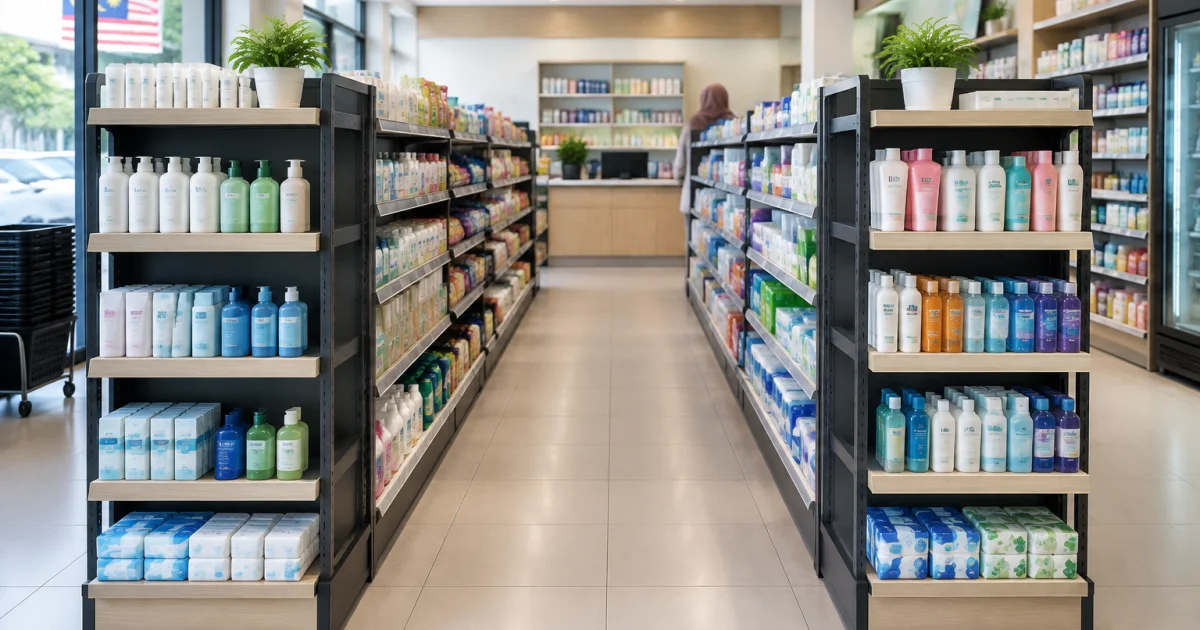
A gondola rack is a modular, freestanding retail shelving system built from uprights, bases, back panels, and adjustable shelves. Typical formats include:
- Wall gondola: against a wall; shelving on one side.
- Island gondola: in the centre; shelving on both sides.
- End cap: a display at the end of an aisle run (high-visibility selling space).
Unlike backroom storage systems, gondola racks must balance durability with presentation and flexibility: clean facings, adjustable shelves, signage, and fast reconfiguration for promotions.
Retail buyers may still compare gondola with other Rack Malaysia options when planning both front-of-house and storeroom needs:
- Gondola racks: customer-facing, accessory-driven, easy to reconfigure.
- Medium duty rack / longspan: cartons and bulk stock in storerooms; appearance is secondary.
- Heavy duty rack: pallet loads and warehouse use; generally not for customer aisles.
Hardware stores can still use gondola extensively, but heavier categories (paint, tools, bulk fasteners) make shelf gauge, bracket strength, and realistic load ratings critical.
2) Define your store needs before you request quotations
Most “wrong rack” purchases come from vague requirements. Before contacting a Display Rack Supplier Malaysia, compile a simple, repeatable checklist so every quotation is comparable.
Start with product mix and packaging reality
- SKU types: snacks/drinks, OTC, supplements, beauty, cleaning, tools, electrical, fasteners.
- Pack formats: tall bottles, wide cartons, blister packs (hooks), small items (bins/dividers).
- Weight hotspots: liquids, canned goods, detergent, paint, power tools.
- Security needs: high-value items may require lockable displays or placement near staffed zones.
In practice, pharmacies often need dividers, shallow shelves, and clear signage; minimarts prioritise replenishment speed and end-cap promos; hardware stores need stronger shelves plus hooks/peg panels and bins for small parts.
Measure the room with “retail” measurements, not only floor area
Beyond floor area, capture constraints that affect bay selection and installation:
- Clear ceiling height (plus beams/ducting/sprinklers).
- Door widths and delivery path (can uprights fit through?).
- Column positions, wall obstructions, and uneven floors.
- Checkout/queue area footprint.
Also identify traffic zones: entry “hot zone,” routes to essentials, and low-traffic corners. Your gondola plan should guide movement without creating bottlenecks.
Decide your operating style
- Frequent promotions → prioritise adjustability, consistent bay sizes, flexible end caps.
- High replenishment frequency → plan aisle widths for staff carts and access to the backroom door.
- Multiple branches → standardise sizes/colour so parts and planograms stay consistent.
Treat gondola racks as a reconfigurable system, not a one-time fixture.
3) Key gondola rack specifications you should compare (the “apples to apples” checklist)
Two quotations can look identical until you compare specifications. Use these points to align supplier offers.
Upright height and base depth
- Taller uprights increase capacity but can reduce sightlines in dense layouts.
- Deeper bases improve stability and allow deeper shelves, but reduce aisle width.
Many minimarts and pharmacies prefer moderate central heights for visibility to the cashier. Hardware stores may use taller or deeper units where space allows, reserving top shelves for slower movers.
Shelf depth, count, and adjustability increments
Depth determines what fits without overhang; adjustability determines how easily you can change categories. Ask:
- Available shelf depths per bay (and per side for islands).
- How many shelves are included in the base price.
- Adjustment increments (how finely shelves can be set).
- Flat vs slanted options, or the ability to angle with accessories.
Shallow shelves and dividers help pharmacies keep small items tidy; minimarts often need standard flat shelves plus bookends; hardware categories often depend more on partitions, bins, and hooks than on extra depth.
Load rating (and what it really means)
Ignore vague “heavy duty” labels. Request clear load per shelf and load per bay, and how it’s defined (evenly distributed vs point load; static vs typical retail use). Heavy categories (cans, detergent, paint, tools) need stronger shelves and brackets to avoid sagging.
- If a supplier can’t explain the rating basis, expect inconsistent performance across stores.
- If shelves flex noticeably in a sample, they may not hold up under real merchandising.
Keep expectations aligned: gondola is not warehouse racking. Use a medium duty rack or heavy duty rack for storerooms and pallet loads where required.
Material thickness, finish, and corrosion resistance
In Malaysia’s humidity, finish quality affects lifespan and appearance. Check:
- Powder coating consistency and edge coverage.
- Colour options and batch consistency (important for multi-branch rollouts).
- Resistance to chipping during installation and restocking.
For pharmacies especially, clean, professional fixtures support customer trust.
Bracket design and “wobble” control
Stability depends on more than aesthetics. Evaluate:
- Base design and levelling points.
- Back panel type (solid or slotted) and how it locks in.
- Bracing between uprights.
- End-of-run finishing and anchoring approach (where appropriate).
Whenever possible, see a sample bay or installed site. A stable system improves safety and reduces ongoing adjustments.
Compatibility of accessories and future expansion
Because store layouts evolve, confirm the platform supports:
- Hooks, pegboard/slotted panels, bins, dividers, bookends, wire baskets.
- Ticket rails and data strips.
- End-cap configurations and promo frames.
- Parts continuity (uprights, shelves, brackets) for future outlets.
This is where supplier choice becomes a long-term decision: a consistent gondola series makes expansion and standardised planograms far easier.
4) Layout planning that works for minimarts, pharmacies, and hardware stores
Layout turns gondola racks into sales, labour efficiency, and customer comfort. You don’t need complex modelling—just practical rules that prevent congestion and improve shopping flow.
Aisle width: balance shopping comfort and space density
Too narrow: customers avoid aisles and replenishment becomes disruptive. Too wide: you lose selling space. Use store format as a guide:
- Minimart: quick traffic, baskets, restocking carts.
- Pharmacy: slower browsing, consultation moments, easier access for elderly customers.
- Hardware: bulky items and customers carrying larger products; consider wider main aisles.
Designate a more comfortable main circulation path (entrance → essentials → checkout), then use denser aisles for secondary categories.
Choose wall gondola vs island gondola intentionally
Wall gondolas suit perimeter runs, long categories (beverages/cleaning), and tighter central floor space. Island gondolas suit creating multiple aisles, browsing on both sides, and a clear “loop” route.
Typical approach: narrow shop lots often use wall gondola plus a few short island runs; pharmacies may keep a more open centre and use islands for seasonal promotions; hardware stores may use islands for fasteners/tools and wall systems with hooks for hanging items.
End caps: treat them as a planned selling tool, not an afterthought
End caps are premium space. Plan them early so quotations include the right end panels, shelves, and signage. Common uses:
- Monthly promotions and bundles
- New products
- High-turn essentials to reduce aisle congestion
Sightlines and security for small retail formats
- Keep central gondola heights moderate; place taller units on the perimeter where possible.
- Avoid tall islands that create blind corners near the entrance.
- Use clear category signage to reduce wandering and staff interruptions.
For high-value items (cosmetics, supplements, small power tools), rely on placement near staffed zones or controlled displays—not only rack height.
5) Accessories and add-ons that make gondola racks perform better
Accessories often determine how easy the store is to run. Budget for them upfront to avoid a “bare shelf” setup that looks messy and takes more staff time to maintain.
Ticket rails, data strips, and shelf talkers
Clear pricing reduces friction and questions at the counter. Confirm compatibility and attachment type (clip-on vs adhesive). If you run frequent promotions, choose a system that’s fast to change and doesn’t damage shelf edges.
Dividers, bookends, and product pushers (when appropriate)
- Dividers: keep small items organised (pharmacy, cosmetics, small hardware packs).
- Bookends: prevent products from toppling and keep facings neat.
- Pushers: create a consistently “fronted” look, but add cost and upkeep.
Hooks, peg panels, and bins for hardware-style merchandising
Hardware and mixed-format stores often need:
- Single/double hooks for blister packs
- Pegboard or slotted back panels
- Plastic bins or metal trays for loose items
Confirm these are native to the system (not improvised fittings) to reduce safety risks and prevent finish damage.
Back panels: solid vs slotted
- Solid panels: cleaner look; often preferred for pharmacies and premium minimarts.
- Slotted panels: more flexible for hooks and hanging accessories; useful for hardware.
If you want both, use slotted panels selectively on bays that need hanging displays.
Lighting and signage considerations
Even without built-in lighting, plan for consistent signage placement:
- Aisle/category headers
- Promo frames/toppers (especially on end caps)
- Brand blocks where permitted by your merchandising plan
Consistency becomes more valuable with every new outlet: customers navigate faster and staff training is simpler.
6) How to evaluate a supplier in Malaysia (beyond the lowest price)
Gondola racks are modular, so after-sales support and parts continuity affect total cost. A cheaper quote can become expensive if parts can’t be matched later or installation quality causes ongoing stability issues.
Ask about design support and site measurement
Good suppliers help translate your space into a workable plan that respects doors, columns, and circulation. Ask whether they provide:
- Site measurement and layout planning
- Basic zoning suggestions based on traffic flow
- Guidance on wall vs island configuration and end-cap counts
This reduces late-stage fit problems and prevents ordering the wrong bay sizes.
Confirm installation scope and responsibilities
Installation affects stability and finish. Clarify:
- Who installs (in-house vs subcontractor)
- Timeline and after-install touch-ups
- How levelling is handled on uneven floors
- Handover checks (alignment, tightening, missing parts)
For multi-branch rollouts, use a repeatable installation checklist and require the same standard each time.
Parts availability and standardisation for expansion
Ask direct questions:
- Will the same series remain available for future expansion?
- Are shelves/brackets interchangeable across sizes?
- How do you order spare parts, and what are typical lead times?
Quality systems and local manufacturing capability
If consistency matters, evaluate process control. For example, Mr Space highlights in-house capabilities (design, manufacturing, supply, installation, maintenance) and quality management systems such as ISO 9001 and ISO 14001. For buyers, the practical benefit is repeatability: consistent fit, finish, and lead times across phases.
When your project mixes retail and backroom storage
Many stores need both customer display and storeroom capacity. Typically:
- Gondola racks for customer areas
- Backroom shelving (boltless shelving or a medium duty rack)
- Warehouse racking in separate facilities where applicable
A supplier with a broader range can help coordinate dimensions, delivery, and installation timing. Still, specify front-of-house and backroom separately because performance requirements differ.
7) A practical buying process (with examples and a quotation checklist)
Use this process to move from “we need gondola” to a confident, repeatable purchase decision.
Step 1: Build a simple “bay schedule”
Create a table listing quantities by bay type and key specs. At minimum:
- Wall gondola bays: quantity, height, base depth, shelf depth, shelves per bay
- Island gondola bays: quantity, height, base depth, shelf depth per side, shelves per side
- End caps: quantity, shelf configuration, signage frames
This becomes your comparison tool and your internal reference for future store expansions.
Step 2: Validate with a rough layout
Even a simple sketch helps prevent costly mistakes. Mark:
- Entrance, checkout, and queue line
- Main circulation path
- Backroom door and restocking route
- High-value categories (visibility/security)
Example: pharmacies typically keep controlled items closer to the cashier and avoid tall central gondolas; minimarts often place daily essentials deeper in the store to encourage pass-by shopping, while keeping restocking paths workable.
Step 3: Request quotations with exact comparison points
Send the same checklist to each supplier:
- Rack series/model, material, and finish details
- Bay dimensions and shelf quantities included
- Load rating basis (per shelf and per bay)
- Accessory list with unit pricing (dividers, hooks, bins, ticket rails, end-cap toppers)
- Installation scope and timeline
- Warranty/maintenance terms
- Spare parts ordering process
This prevents “cheap” quotations that omit key components.
Step 4: Check a sample bay for feel and usability
If possible, inspect a sample or showroom setup and test:
- Shelf adjustment ease (no special tools needed for basic changes)
- Stability when gently pushed at the top
- Edge finish (avoid sharp edges in customer areas)
- Accessory fit (hooks, dividers, ticket rails) without wobble
For multi-outlet operators, standardise a “default bay” so new store launches are faster and more consistent.
Step 5: Plan replenishment like a small “warehouse workflow”
Retail replenishment is still logistics. To reduce staff time and errors:
- Organise backroom locations to mirror front-of-house categories.
- Keep fast movers on easy-to-reach backroom shelves.
- Ensure aisle widths allow restocking during slower periods without blocking customers.
If the storeroom is overloaded, add appropriate backroom storage rather than overbuilding retail gondola to compensate. Use the right system in each area.
Conclusion: buy gondola racks as a system you can live with and scale
For minimarts, pharmacies, and hardware stores, gondola racks are an operating tool—not just fixtures. The right system supports clear merchandising, safer aisles, faster replenishment, and consistent presentation across outlets. Compare quotations on the details (dimensions, load ratings, finish, stability, and accessory compatibility), then choose a supplier that can support installation quality, parts continuity, and future expansion.
Start with a bay schedule and a simple layout sketch, then validate stability and usability with a sample bay before committing. That process typically saves more time and money than negotiating a small discount on unclear specifications.
Recommended internal reading: If you’re also planning overall rack strategy, you may find these guides useful: gondola rack efficiency and ROI considerations, how to choose a racks supplier in Malaysia, and tips for supermarket-style rack selection.
Frequently Asked Questions
How do I choose between wall gondola and island gondola for a small shop lot?
Use wall gondola on the perimeter to keep the centre open, then add short island gondola runs only where you can maintain comfortable aisle width. In narrow minimarts or pharmacies, fewer island runs usually improves sightlines to the cashier and makes replenishment easier.
What load rating should I look for in gondola racks for minimarts or hardware stores?
Ask for the stated load per shelf and whether it assumes evenly distributed weight. Minimarts with liquids and canned goods and hardware stores with tools or paint need stronger shelves and brackets to prevent sagging. If the supplier cannot explain the rating basis clearly, request a sample bay test or consider a different system.
Which gondola accessories are most important to budget for from the start?
Most stores benefit immediately from ticket rails/data strips for clear pricing, plus dividers or bookends to keep facings tidy. Hardware-style sections often need hooks, slotted/peg panels, and bins for small parts. Planning these upfront avoids a “bare shelf” setup that looks messy and is harder for staff to maintain.
Can one supplier handle both retail gondola racks and storeroom racking?
Yes—some suppliers provide both retail display systems and backroom storage such as boltless shelving, medium duty rack solutions, and heavier warehouse racking. Coordinating both areas with one provider can help align dimensions, delivery, installation timing, and future spare-part needs, but you should still specify each area separately because the performance requirements differ.
How can gondola layout help my team run a more efficient store operation?
A good layout reduces unnecessary movement: keep fast movers on easy-to-reach shelves, maintain aisles wide enough for restocking without blocking customers, and align backroom storage by category so staff can find items quickly. Think of it like a simplified warehouse workflow—shorter routes and clearer organisation usually mean faster replenishment and fewer errors.
Need a gondola rack layout that fits your store and your product mix?
Mr Space supplies and installs retail display & gondola racks for minimarts, pharmacies, hardware stores, and multi-branch rollouts. Share your floor plan and product categories—our team can help you plan a practical layout, recommend the right shelf depths and accessories, and deliver a system that’s easy to expand later.


