Warehouse safety teams and procurement often focus on capacity and pricing when buying racking. For heavy-duty pallet storage, risk usually sits in the details: connector geometry, upright thickness, beam-end design, baseplates, anchors, protectors, tolerances, and what the supplier will (and won’t) document.
This is especially relevant in Malaysia as facilities go taller, SKUs change faster, and material-handling equipment (MHE) becomes more varied. “Standard” configurations are often pushed beyond their original assumptions. If you are specifying or replacing a Heavy Duty Rack Malaysia system, treat the purchase as an engineered safety asset—not just steel storage.
Below are supplier and specification trends affecting safety reviews, plus a practical checklist for quoting, installation, and acceptance.
What’s changing in heavy-duty rack specifications (and why it affects safety)
Even when layouts look similar on drawings, safety performance can vary based on how loads are transferred and restrained. Common shifts in warehouse projects include:
- Higher vertical utilisation: more beam levels and tighter clearances raise the consequence of deflection and impact.
- Heavier or more concentrated pallet loads: denser products, non-uniform pallets, and point loads increase the need for accurate load data and correctly rated components.
- More equipment mixing: forklifts, reach trucks, and pallet jacks create different impact patterns and aisle behaviour.
- Faster reconfiguration cycles: rapid re-slotting increases the chance of exceeding ratings if signage and documentation are unclear.
- Stronger documentation expectations: audits increasingly require traceable specs, consistent part IDs, and installation records.
Bottom line: don’t rely on “same as previous rack” logic. Validate the supplier’s engineering basis, component ratings, and installation method as one complete system.
Supplier evaluation updates: what safety teams should ask for during quotation
Many rack failures come from gaps between what was quoted, what was installed, and what operations assumed. When comparing suppliers (including any racks manufacturer Malaysia options), request information that lets you verify the full configuration.
1) Component traceability and part consistency
Ask for the exact upright series, beam series, connector type, lock/pin type, bracing pattern, baseplate type, protectors, and accessory part numbers. This reduces risky “equivalent” substitutions that can change capacity or behaviour.
2) Load rating basis and assumptions
Require a clear statement of:
- Rated UDL (uniformly distributed load) per beam pair and per level
- Maximum bay load
- Any limitations (pallet size range, eccentric load limits, maximum beam levels)
- Assumptions on floor condition and anchoring
If your pallets vary (overhang, broken boards, inconsistent stringers), flag it early. The rack may be capable, but the signed specification must match your real load-handling conditions.
3) Installation scope, supervision, and maintenance support
Safety depends on build quality: plumb/level frames, correct anchor installation, properly seated connectors, and installed safety devices. Confirm who installs, how work is supervised, and what handover documents you’ll receive. Also ask how damaged components are assessed and replaced.
4) Quality management and manufacturing control
If the supplier manufactures or controls fabrication, ask how they maintain consistency in steel forming, punching accuracy, and coating across batches (for example, through ISO-based management systems). This matters most when you add bays later and need parts to match performance expectations.
Safety-critical specifications to validate in a Pallet Racking System Malaysia purchase
For most warehouses, key risk controls are upright stability, connector integrity, anchoring, and impact protection. Review these areas with engineering and safety in mind.
Uprights, bracing, and stability (don’t treat uprights as interchangeable)
Uprights vary by thickness, hole pattern, geometry, and stiffness. Two frames that look similar can behave differently under the same load—especially at height. Validate:
- Upright series and gauge/thickness as quoted (not just “heavy duty”)
- Bracing type and spacing along the frame
- Frame depth vs. pallet size and allowable overhang
- Plumbness tolerance and shimming requirements
If you increase beam levels or clear height, confirm whether the frame design must change (e.g., heavier uprights or different bracing) rather than assuming you can simply extend the existing design.
Beam connectors, locking pins, and engagement checks
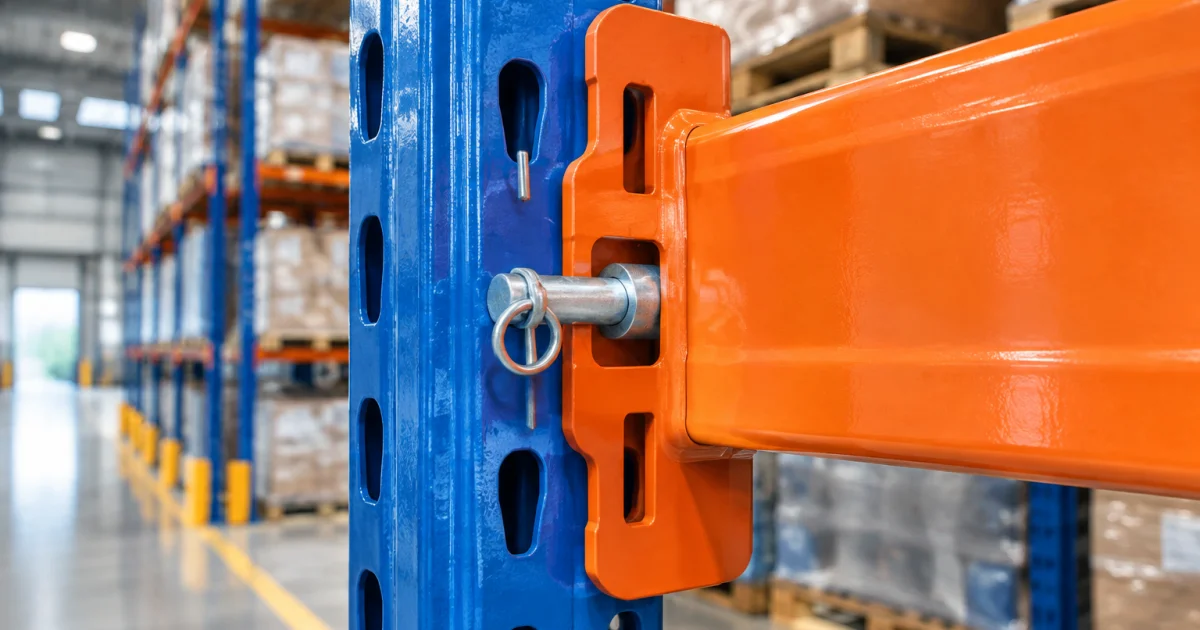
Connectors are a common weak point after impact or poor installation. Confirm:
- Number of connector hooks/tabs and how engagement is verified
- Type of safety lock (pin/clip) and that one is supplied for every beam end
- Beam-to-upright fit tolerances to avoid loose engagement
Operationally, define who checks beam locks during reconfiguration. Good hardware still needs disciplined installation and checks.
Baseplates and floor anchors (often underestimated)
Anchoring is part of how the rack resists impact and reduces progressive collapse risk. Clarify:
- Baseplate size and thickness
- Anchor type and quantity per upright suitable for your slab
- Floor slab expectations (strength, cracking, levelness)
- Who is responsible for floor scanning/marking if required
If you have an older slab, repaired concrete, or uneven areas, raise it during site measurement. It affects shimming, plumbness, and anchor performance.
Rack protection and impact management
In many operations, impacts are predictable. Protection should be specified, not added later:
- Upright protectors at aisle ends and high-risk frames
- End-of-aisle barriers where turning impacts occur
- Column guards where racking is near building columns
- Clear load-limit signage and beam-level identification
Select protection based on your MHE types, travel paths, and operator behaviour—not only cost.
Coating and corrosion considerations
Coating quality and surface preparation affect durability in humid areas or where cleaning chemicals are used. While coating is not the structural design basis, deterioration can hide damage and accelerate corrosion at joints. Ask what coating process is used and whether it fits your environment.
How to verify safety during installation and acceptance (a practical workflow)
A strong specification still needs controlled execution. Use staged checks that safety, engineering, and operations can sign off together.
Step 1: Pre-installation verification (before steel arrives)
- Confirm the final layout supports workflow, aisle widths, and MHE turning radii.
- Document pallet dimensions, pallet entry direction, and load weights (typical and maximum).
- Agree protection locations (end frames, corners, traffic zones).
- Set acceptance criteria: plumb/level tolerances, anchor torque records, and a punch-list process.
Step 2: On-delivery checks (before installation starts)
- Verify components match the quote: upright series, beam lengths, connectors, bracing sets, baseplates, and safety locks.
- Check for transport damage and coating defects.
- Segregate and label questionable components to prevent accidental installation.
Step 3: Installation controls (during build)
- Ensure anchors are installed as specified and not substituted without approval.
- Use shimming correctly to achieve plumb frames.
- Verify every beam end has its locking device installed.
- Confirm row spacers and frame ties (if specified) are installed at required intervals.
Step 4: Final acceptance and documentation (before stocking)
Before loading pallets, require a handover pack that supports future audits and safe changes. At minimum request:
- As-built layout (bay numbering, beam levels, and deviations)
- Rated capacities (per level and per bay) aligned to your pallet assumptions
- Inspection guidance for operations (what damage triggers repair or replacement)
- Maintenance approach and replacement-parts process
This documentation becomes critical when you reorganise inventory, add beam levels, or investigate damage incidents.
Choosing the right configuration: selective, push-back, drive-in, and mezzanine integration
System type affects safety risks and control measures. A mismatch between design and daily operations creates ongoing exposure.
Selective pallet racks (most common, but not “simple”)
Selective racking is flexible for mixed SKUs and typically easiest to inspect. Safety focus is impact protection, beam-lock discipline, and staying within rated limits during frequent slotting changes.
When comparing systems, confirm heavy-duty selective options match your pallet profile and operating height. Example category: Heavy Duty Racking System.
Push-back and other high-density systems
High-density designs reduce aisles and increase storage, but add moving parts and different loading patterns. Ensure the supplier documents the safe loading/unloading sequence and inspection points unique to the system. Example: 6500 Series Heavy Push Back Pallet Racking System.
Drive-in systems (impact and alignment sensitivity)
Drive-in/drive-through systems work well for high-volume, low-SKU storage, but are more sensitive to forklift impact and require stricter operating discipline. Safety depends on rail alignment, upright protection, and operator training, so make protection scope and inspection routines part of procurement.
Mezzanine floor interfaces (where racking decisions affect building-level safety)
Vertical expansion projects increasingly combine racking with a mezzanine floor. If your plan includes a mezzanine floor Malaysia concept, coordinate early so rack layout, egress routes, sprinkler coverage, and forklift travel paths remain compatible. Treat mezzanine and racking as one integrated safety plan, not separate purchases.
Conclusion: safer buying means clearer specs, better checks, and better handover
Racking safety depends less on brochure claims and more on clear, traceable specifications; correct installation; protection against predictable impacts; and usable handover documentation for daily operations. The most important updates are often procedural: explicit load assumptions, component traceability, installation controls, and acceptance records.
If you’re planning a new layout, increasing rack height, or replacing damaged bays, run the purchase as a controlled safety project. That approach reduces surprises during installation and helps prevent unsafe reconfiguration later.
Frequently Asked Questions
What information should I request from a heavy-duty rack supplier for safety sign-off?
Request the upright and beam series identifiers, connector and safety lock details, rated capacities per beam level and per bay, anchoring/baseplate specifications, protection scope, and an as-built handover pack (layout, bay numbering, load signage guidance, and inspection rules).
How do I confirm the load rating is appropriate for my pallets?
Provide the supplier with your pallet dimensions, typical and maximum pallet weights, load distribution (uniform vs. concentrated), and handling method. Then verify the quote clearly states the assumptions used (UDL per beam pair, maximum bay load, pallet overhang limits, and any restrictions on eccentric loading).
Are safety lock pins really necessary on pallet rack beams?
Yes. Beam locks (pins or clips) help prevent accidental beam dislodgement during impact or improper forklift contact. They are low-cost but safety-critical, and they should be installed on every beam end and checked during any rack reconfiguration.
Do I need different heavy-duty racking specs for Johor projects?
The core safety principles are the same anywhere, but site conditions can differ. For a heavy-duty racking system in Johor (or any location), confirm floor slab condition, operating equipment, aisle widths, and storage heights during site measurement so the racking design, anchoring plan, and protection scope match the actual facility.
When should I consider adding a mezzanine floor instead of more racking rows?
Consider a mezzanine when you need more usable workspace or picking/staging area and you have vertical clearance but limited floor area. Coordinate mezzanine planning with your racking layout early so access, safety barriers, loading zones, and workflow remain practical and compliant with your internal safety requirements.
Need a safer heavy-duty racking specification review?
Mr Space provides end-to-end storage solutions—from site measurement and layout planning to in-house manufacturing, installation, and maintenance. If you’re validating a new heavy-duty rack purchase or upgrading an existing pallet racking system, we can help you clarify load assumptions, choose the right configuration, and prepare a practical handover pack for warehouse safety sign-off.


