
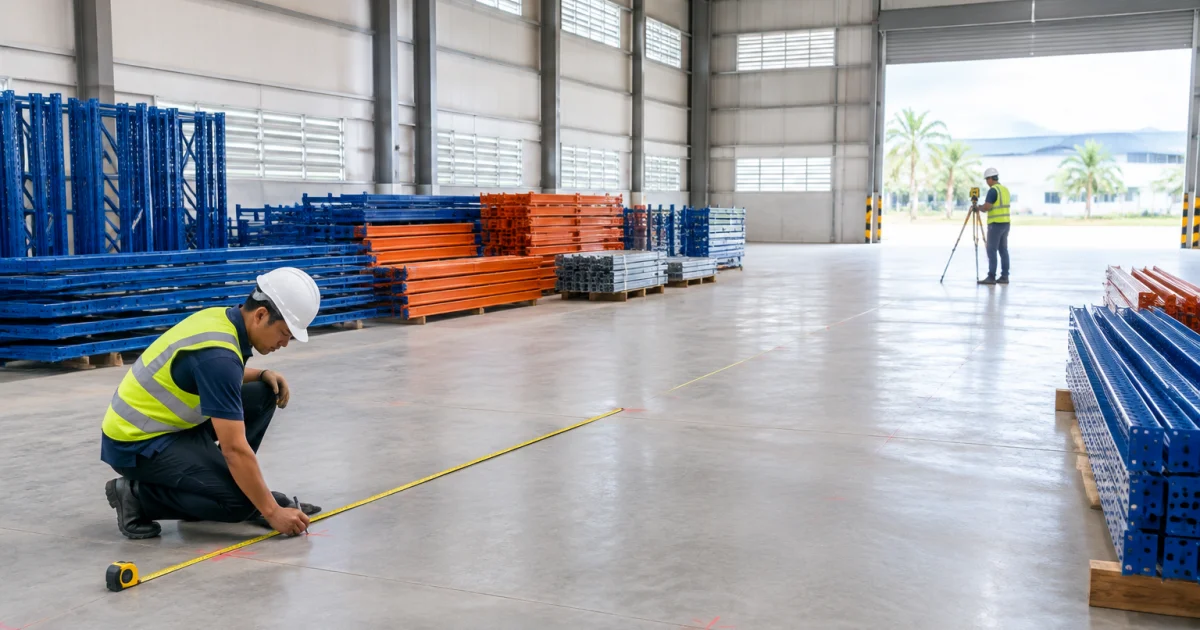
If you are comparing suppliers for warehouse racks, shelving, pallet racking, or a mezzanine floor, the biggest differences often show up after you sign the quotation: site measurement accuracy, drawing quality, delivery coordination, installation discipline, and how issues are handled during handover.
This tutorial explains the service levels you should expect from a Racks Supplier Selangor—step by step—so you can evaluate proposals consistently and reduce operational disruptions. The goal is simple: get a racking system that fits your space, supports your workflow, and is installed safely with clear documentation.
Step 1: Clarify scope before anyone designs (your “service baseline”)
Before a supplier starts proposing a warehouse racking system, you should receive a structured discovery process. This is where good suppliers separate themselves from “sell-and-go” vendors.
What a supplier should ask you (and why it matters)
- Storage profile: pallet size, carton sizes, SKU count, turnover rate, and whether you need FIFO/FEFO flow (this influences selective vs drive-in vs push-back vs flow systems).
- Load details: maximum pallet weight, typical pallet weight, load distribution, and any point loads (critical for beam selection and safety factors).
- Handling equipment: forklift type, turning radius, mast height, and aisle preferences (affects aisle width and rack clearances).
- Workflow: receiving and dispatch zones, picking method, staging areas, and whether you need carton shelving or pallet-only storage.
- Site constraints: ceiling height, sprinkler lines, columns, floor condition, loading bays, and access limitations for trucks during delivery.
If you are looking at Shelving Rack Selangor options for a backroom or parts store, you should still expect the same clarity: what will be stored, how often it is accessed, and what “reconfiguration” might be needed as inventory changes.
Step 2: Expect a proper site survey and measurement (not guesswork)
A reliable supplier should offer an on-site visit before finalizing drawings—especially for pallet racks, high-bay configurations, or any system that will be anchored and aligned across a large floor area.
What “good” looks like during a site survey
- Dimensional checks: bay lengths, clear heights, column grids, obstructions, and door/roller shutter clearances.
- Floor observations: visible cracks, slopes, uneven areas, and expansion joints that affect anchoring and leveling.
- Operational constraints: whether installation must be phased, done after hours, or isolated for safety.
- Safety and access planning: where materials can be staged without blocking emergency routes or daily operations.
Service level to expect: a supplier should document the survey results, confirm critical dimensions in writing, and explain any design assumptions. If the supplier cannot articulate what they measured, you risk misfit racks, rework, or layout compromises.
Step 3: Evaluate the design deliverables (layout, specifications, and options)
Design is not just a picture of uprights and beams. It is a set of decisions that affect capacity, accessibility, and long-term adaptability. When comparing quotations in Selangor, ask what design outputs are included and what is considered “extra.”
Minimum design outputs you should expect
- Proposed layout plan: bay arrangement, aisle widths, rack depths, and clearances around columns and walls.
- Configuration summary: number of bays, number of levels, beam lengths, upright heights, and basic accessories.
- Load information: stated beam level load rating and bay load rating (in general terms) based on your requirements.
- Operational notes: suggested picking faces, staging areas, or carton-flow zones (where relevant).
Useful “next-level” design service (high value for busy sites)
- Phasing plan: how to install in sections so receiving/dispatch can continue.
- Future expansion thinking: how to add bays, increase levels, or convert areas into medium-duty storage later.
- Integration planning: where a mezzanine floor could sit without blocking forklift routes or fire equipment (especially relevant for space optimization projects).
If you are assessing a broader Racking System Malaysia proposal across multiple sites, standardization becomes a service level: consistent rack types, spare parts compatibility, and repeatable labeling/maintenance practices.
For readers who want to understand the fundamentals behind layouts and rack types, this internal guide can help you align terminology with your project brief: What’s a warehouse racking system.
Step 4: Confirm delivery service levels (planning, protection, and site coordination)
Delivery problems create the most avoidable downtime: wrong items, damaged components, poor unloading plans, and materials left where your team cannot work. A good supplier treats delivery as a managed project step, not an afterthought.
What to expect before delivery day
- Delivery schedule confirmation: agreed date/time window, truck access requirements, and unloading responsibilities clearly stated.
- Delivery documentation: packing list or delivery order that maps components to the quoted system (so you can check completeness).
- Staging plan: where uprights, beams, and accessories will be placed on-site to support an efficient installation sequence.
What to expect on delivery day
- Component protection: palletized and wrapped items, with reasonable care to avoid scratches, bent beams, or deformed uprights.
- Count-and-check process: practical verification of key items (uprights, beams, bracing, base plates, anchors) before installers begin.
- Issue handling: a clear process if there is shortage or damage—who records it, how replacement is arranged, and how it affects timeline.
Tip: if your site has limited space, ask for staged deliveries (split by zone) so you avoid turning your warehouse into a temporary storage yard.
Step 5: Expect professional installation management (safety, QA, and handover)
Installation quality is where service level becomes visible. Even strong components can perform poorly if installed out of plumb, misaligned, or anchored improperly. A capable supplier should provide trained installers and a structured method statement for how the work will be executed.
Pre-install checks you should see
- Site readiness check: confirmation of floor condition, access, and any required area clearing.
- Material verification: installers confirm bay counts, beam lengths, and accessory sets match the layout.
- Safety briefing: work zone control, PPE expectations, and how traffic (forklifts, pedestrians) will be separated.
Installation practices that indicate a higher service level
- Accurate setting-out: bay lines marked, anchor points planned, and aisles kept consistent for forklift travel.
- Plumb and level control: racks aligned correctly so beams seat properly and loads sit evenly.
- Anchoring discipline: base plates and anchors installed consistently according to the agreed design approach and site conditions.
- Accessory completion: end protectors, column guards, row spacers, and required bracing installed—not left for “later.”
- Clean worksite habits: packaging removal, hardware collection, and minimal obstruction to your operations.
Commissioning and handover (what you should receive)
- As-built confirmation: final bay counts and configuration match what was agreed, or changes are documented.
- Basic usage guidance: how to load safely, what not to do (overhang, impact damage), and how to report issues.
- Punch-list resolution: a defined process to fix minor defects such as missing bolts, accessory gaps, or touch-ups.
If you are installing a heavy duty rack setup or high-density pallet system, ask how the supplier manages installation sequencing to reduce risk and speed up completion. Good installers will explain the order (uprights → bracing → beams → accessories) and where tolerances matter most.
Step 6: Check after-sales support (maintenance, changes, and long-term reliability)
The best time to define support is before you purchase. After-sales service is a key differentiator for businesses that will expand, reorganize, or run multi-shift operations.
After-sales service levels to look for
- Spare parts availability: ability to supply additional beams, upright frames, decking, or guards when you expand or repair damage.
- Reconfiguration support: guidance on adding levels, changing beam heights, or converting areas from pallet storage to carton shelving.
- Inspection and upkeep options: periodic checks for impact damage, loose anchors, missing locking pins, or misalignment (especially for high-traffic aisles).
- Upgrade path: support if you later add a mezzanine floor, extend racking rows, or evaluate automation readiness.
For example, if you expect growth, it helps when the supplier can plan your initial layout so future bays can be added without relocating entire rows. This is where a “smart storage system design” mindset is practical: plan for operational change, not only today’s pallet count.
To compare system choices from light-duty to pallet applications, you may find this internal resource useful: From light loads to heavy pallets: finding the ideal racking system solution in Selangor.
Practical checklist: how to compare suppliers in Selangor (copy into your RFQ)
Use this as a practical “service level” checklist when you request quotations. You can paste these questions into your RFQ email so each supplier responds in the same structure.
- Survey: Will you conduct an on-site measurement before final drawing approval? What will you measure and document?
- Design: Will you provide a layout plan and a configuration summary (bays/levels) for approval?
- Load requirements: How will you confirm the system matches our pallet weights and handling method?
- Timeline: What is the lead time for manufacturing/supply, and how many installation days are expected?
- Delivery: Do you provide packing lists and a component count/check process on arrival?
- Installation: Who supervises installation and what QA checks do you perform (plumb/level/anchor checks)?
- Handover: What documentation or guidance is provided at completion?
- After-sales: Can you supply spare parts, add bays, or reconfigure the layout later?
When a supplier answers these clearly, you are not just buying steel—you are buying predictable execution.
Conclusion: choose service reliability, not only rack specifications
A capable racking partner should guide you from site survey to design approval, then manage delivery and installation with disciplined workmanship and clear handover. When you evaluate a Racks Supplier Selangor, look for evidence of process: documented measurements, practical layout thinking, coordinated logistics, safe installation practices, and support after the racks are in use.
If you want a broader perspective on selecting suppliers and what to look for in end-to-end service, this internal guide complements the checklist above: The ultimate guide to choosing a racks supplier in Malaysia.
Frequently Asked Questions
Do I really need an on-site survey before buying racking in Selangor?
For most pallet racking, high-bay storage, or any anchored system, an on-site survey is strongly recommended. It helps confirm clear heights, columns/obstructions, floor condition, and access routes—details that can change the final layout and prevent costly rework.
What design documents should a racking supplier provide before I approve fabrication?
At minimum, expect a layout plan (bay positions and aisles) and a configuration summary (number of bays, levels, upright heights, beam lengths, and key accessories). For more complex projects, it is also reasonable to request notes on assumptions, installation phasing, and future expansion options.
How can I tell if an installation team is doing quality work?
Look for clear setting-out lines, consistent aisle widths, racks installed plumb and level, disciplined anchoring, and completion of safety accessories like column guards and row spacers where required. A good team also keeps a controlled work zone and closes a punch-list before handover.
What should be included in delivery and unloading for a warehouse racking system?
You should receive an agreed delivery schedule, a packing list or delivery order, and a clear unloading/staging plan. On arrival, components should be protected and counted, with a defined process to record and replace any damaged or missing items.
Can a supplier help with smart storage system design in Malaysia for future growth?
Yes. A strong supplier should design around your workflow and expansion plans—such as leaving space for additional bays, planning reconfigurable beam levels, or reserving zones for carton shelving, a mezzanine floor, or higher-density pallet storage later—so your storage system can evolve without major disruption.
Plan your racking project in Selangor with Mr Space
Mr Space provides complete in-house storage solutions—from site measurement and layout planning to manufacturing/supply, professional installation, and ongoing support. Whether you need pallet racking, medium-duty shelving, a mezzanine floor system, or a customized warehouse layout, our team can help you specify the right capacity, workflow, and installation plan for your facility.


